|
|
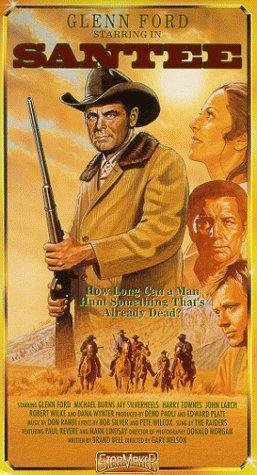
(1973) Director: Gary Nelson If you were
to go around the world and examine the countries that have a home grown
motion picture industry, more likely than not you will find that each
of these countries has made some kind of valuable contribution that
makes the idea of world cinema shine. Japan, for instance, has produced
some seriously talented directors ranging from Akira Kurosawa to Hayao
Miyazaki. England has a reputation for colorful and artful dramas that
have built a loyal audience. But the one country that has possibly made
the biggest contribution is the United States. No real surprise there -
they not only have the money, but a big domestic audience that has
often made it possible to experiment and try new things that have often
stretched the boundaries of what filmmakers can do. One obvious example
was with the original version of The Jazz Singer,
which was the first feature length movie to have synchronized dialogue
sequences. Then a few years later was another great achievement, the
first all-color movie (Becky Sharpe)
was released to theaters. Ove the years a number of more achievements
were made in the world of motion pictures, ranging from widescreen
photography to three-dimensional movies. But before all of those
achievements was the groundbreaking 1903 short subject The Great Train Robbery,
while maybe not the first short subject to have a definite story to it,
certainly encouraged filmmakers around the world to not only put
stories in their movies, but to follow this short's filmmaking
techniques such as with its on-location shooting. The Great Train Robbery was not only a great influence on filmmaking techniques, it was also one of the first cinematic tastes of a new film genre that was to quickly become and remain very popular for decades to come - the western. Westerns flourished in the silent era, and when sound was introduced they remained popular in the 30s, 40s, and 50s. But when the 60s came along, the western started to decline. It was invigorated in the later part of the decade when spaghetti westerns came to these shores, but that was only temporarily. By the mid 1970s, the western was all but dead both in America and in Europe. What caused the western to die? Well, I've thought about it a little, and it doesn't seem to be because of one reason. Rather, it's a number of things that combined dealt the death blow. One reason I think was just about every western story had been done to death. Plots ranging from revenge to recovering treasure had been covered with just about every possible angle, and audiences weren't being shown anything new. A second reason was that new kinds of action movies were coming out, like tough cop films and kung fu epics. These new kinds of action movies possibly seemed fresher and more exciting than the sight of people riding horses. A third possible reason was the hit movie Blazing Saddles. It was a western, but a comic one, one that poked fun of the conventions of the genre. Some writers have stated that because of this movie, no one subsequently could take the western genre seriously after that. A possible fourth reason is that the youth audience was starting to take command of the box office, and youths of the time were looking for movies concerning people like themselves of their own time, not older people who were stubbornly stuck in the past. Whatever the reasons may be, the western is pretty much
dead today. We are lucky to even get one major studio western a year
nowadays. It's strange, because the box office has shown ever since the
first western comeback movie more than twenty-five years ago (Silverado),
modern As I said earlier, I love westerns, so much so that many westerns that would be judged mediocre to poor by most viewers would get a thumbs up from me. I was pretty sure then that I would enjoy Santee a lot. However, I have to admit that I was pretty disappointed by the movie overall, so I can only imagine what a person who doesn't love westerns would think. The movie makes some grave miscalculations that doomed it to be a forgotten western. I would like to talk about the first miscalculation the movie made, one that should have been fixed before shooting began. And that is with the character of Jody. When you read the plot synopsis in the above paragraph, how did you picture the character of Jody? More likely than not you pictured him as I did as a fairly young child, one around the age of Santee's murdered son. Maybe you pictured him as a young teenager - that would work as well. But neither of those two plausible portraits are used here. Instead, Jody is mentioned to be nineteen years old. Well, maybe that still could have worked, but with the casting of Michael Burns in the role, all credibility is thrown out the window. With Burns being twenty-six years old when Santee was filmed, he looks like he is, a grown man instead of someone with some growing up to do. This by itself ruins the movie. Seeing the character of Santee in effect trying to replace the memory of his murdered young son with a grown man is an extremely silly sight. It just doesn't feel right that this role is played by an adult, and you'll keep wondering just what the casting director was thinking when he or she cast Burns in a role that he's clearly too old for. I don't place any blame on the movie's failure on Michael Burns himself. While you do get a sense while watching the movie that even he feels he is sorely miscast, at the same time it's clear that he is trying his absolute best to sell the role. By the end, you'll be willing to give him another chance in another movie. While I'm speaking of performances, I would like to praise the small but noteworthy performance by Jay Silverheels as the ranch's foreman, a role that refreshingly never mentions the ethnicity of the character and treats him as an equal. By now, you are probably wondering about Glenn Ford's performance. Reading the plot synopsis, and remembering Ford's many past good performances as decent people determined to do the right thing, you might think that giving him the role of Santee would be great casting. Ford does have a few good brief scenes, like when Santee talks to the sheriff after killing the Deake gang, but for the most part he comes across as being very uncomfortable in this environment. More often than not he comes across as being curt and grumpy. When he talks to the character of Jody, you don't see the good in his own character, and it's hard to build up sympathy for him. I suspect that one big reason why Ford seems ill at ease is that for the most part the screenplay doesn't give him all that many opportunities to express his character. When Jody finds about the child Santee once had and was murdered, Jody doesn't learn this from Santee himself - someone else tells Jody the sad story. And when Jody brings up the subject much later in the movie, Santee barely expresses his feelings on this sore spot. It's not just the character of Santee that is inadequately written. The pivotal role of Jody also suffers from a lack of proper development. For instance, after his father is killed by Santee, Jody for a while has the urge to avenge his father's death by killing Santee. But then all of a sudden, we get a scene where Jody and Santee are laughing it up as Jody struggles to learn the ranch task of cow punching, and all thoughts of revenge are suddenly dissolved and never brought up again. A better screenwriter would have Jody struggling with his feelings for the longest time. But even if the screenplay for Santee had been better written, there would still be one big problem that viewers would be struggling with. Like several other movies made in the 1970s (such as Cracking Up), Santee was not shot on film - it was instead shot on videotape and then transferred to film. While there are a few shots taking place in the countryside on a sunny day that don't look too bad, the majority of the movie looks amateurish. Some shots look blurry or out of focus. Some night sequences have been given terrible day for night photography, some being so dark that you can't tell at all what's going on, and other night sequences boasting goofs like a campfire having blue-shaded flames. The movie is woefully lacking visual flair, which may be why director Gary Nelson (The Black Hole) in part seems to be compensating with the insertion of bloody violence, violence that got a PG in its day but would no doubt get at least a PG-13 today. The violence does grab your attention, but the rest of the movie has been so inadequately written with its unbelievable and unsympathetic characters that otherwise you'll be nodding off quickly. It was sub par efforts like Santee in the 1970s that contributed to the death of the movie western. (Posted December 26, 2015) Check
for availability on Amazon (DVD) See also: Against A Crooked
Sky, Cheynne Warrior, Mustang Country |
 westerns that happen to be